
Shoulder Pain
Get back to doing what you love.
Shoulder pain can make everyday things like carrying, lifting, reaching overhead, sleeping on your side, or even getting dressed uncomfortable.
At Optimum Physiotherapy Clinic, we look at the complete picture. We assess your shoulder joint, neck, back and movement patterns to understand what’s driving your symptoms and create a treatment plan tailored to you and your goals.

What Could Be Contributing to Your Shoulder Pain?
Shoulder pain may begin after a specific injury or develop gradually as different factors overlap. Identifying what matters in your case helps guide treatment.
Mechanical overload and tissue sensitivity
Sport, heavy lifting or repetitive daily tasks can exceed the current capacity of your shoulder muscles and tendons, leaving them irritated and sensitive.
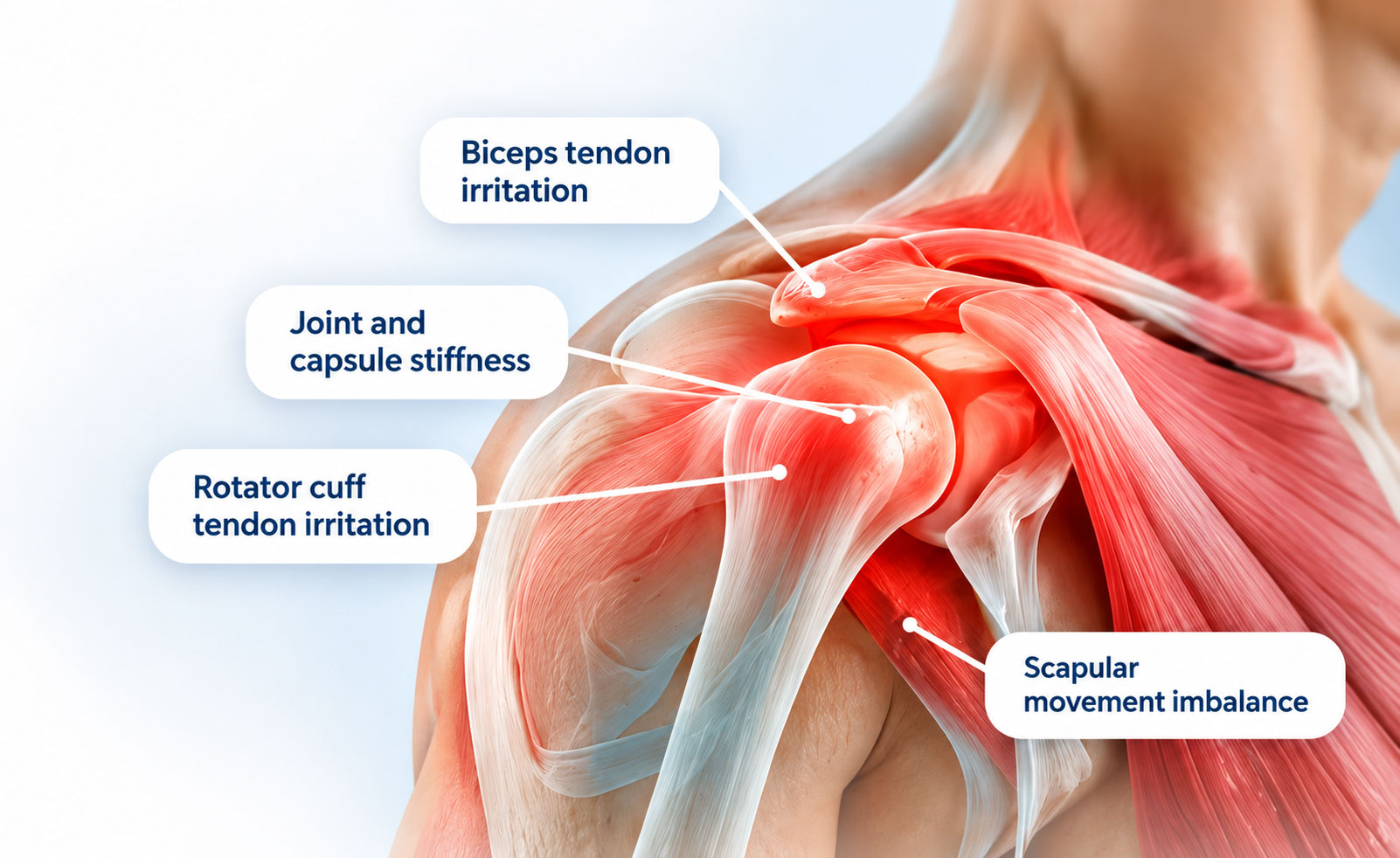
Joint and capsule stiffness
Frozen shoulder or age-related joint changes can limit movement and make reaching or rotating your arm uncomfortable.
Biceps tendon irritation
Repeated pulling, lifting or swinging can irritate the biceps tendon and cause pain around the front of the shoulder.
Shoulder blade movement imbalance
Weak or fatigued upper-back and shoulder-blade muscles may reduce support and increase strain on surrounding tendons.
Previous injury or instability
Falls, impacts or dislocations can affect how the shoulder moves and leave stiffness, sensitivity or a feeling of instability.
Neck, upper back, stress and recovery
Nerve irritation or muscle tension can refer pain into the shoulder or arm. Poor sleep, fatigue and stress can also affect pain sensitivity.

What Does Shoulder Pain Feel Like?
Shoulder pain can feel different depending on the structures involved. The type of discomfort is useful information, but it cannot confirm a diagnosis on its own.
Cramping, dull or aching
May be associated with muscle fatigue, strain or tension.
Deep ache, sharp catch or pinch
Can occur when irritated tissues become sensitive during movement.
Dull ache and stiffness
May be felt around the joint capsule or surrounding ligaments.
Sharp or shooting pain
Can sometimes relate to nerve irritation around the neck or arm.
Burning or stinging
May be linked with heightened nerve sensitivity.
Throbbing or diffuse pain
Can occur with local irritation or inflammatory responses.
When Should You See a Physiotherapist?
It can be tempting to wait for shoulder pain to clear up. If symptoms persist, return whenever you resume activity, or start limiting everyday movement, an assessment can help you understand what to do next.
Consider booking an assessment if you notice:
- Pain lasting longer than three days
- Unusual joint sensations or instability
- Pain returning when you resume normal activity
- Reduced shoulder movement or worsening stiffness
- Pain during or after sport, gym work or lifting
- Loss of shoulder strength
- Pain that interrupts your sleep
- Numbness, tingling or pain travelling down the arm
- Difficulty with daily tasks or overhead movements
- Uncertainty about what is causing your pain
Shoulder Physiotherapy Tailored to You
We don’t believe in one-size-fits-all exercise sheets or generic treatment plans. Your care is built around your assessment, your current capacity and the activities you want to return to.
Understand the cause
We discuss how your pain started, what affects it and how it impacts daily life. Your shoulder, neck, upper back, strength and movement may be assessed where relevant.
Hands-on treatment
Depending on your needs, treatment may include joint mobilisation, soft-tissue techniques and stretching to help manage discomfort and restore movement.
Build strength and control
Individual exercise rehabilitation may include rotator cuff strengthening, shoulder-blade stabilisation, mobility work and functional movement training.
Adapt daily activities
Practical guidance may cover desk setup, sleeping positions, gym technique and sports movements, plus dry needling, dynamic cupping or taping when suitable.
Your physiotherapist will explain the findings, help you understand what you can do yourself and guide a gradual return to the activities that matter to you. Techniques are selected according to your assessment and suitability.
Frequently Asked Questions About Shoulder Pain
Learn more about shoulder symptoms, physiotherapy and what to expect from your care.
How long does shoulder pain take to improve?
There is no single timeline. Recovery depends on the cause, severity, how long symptoms have been present and how your shoulder responds to treatment. Some mild problems improve within weeks, while frozen shoulder or significant tendon injuries can take longer. Your physiotherapist can help outline a plan after assessment.
Should I rest my shoulder if it hurts?
Complete rest is rarely the best long-term solution for many shoulder problems. Temporarily reducing movements that significantly aggravate symptoms may help, while gradually restoring movement and strength is often important. Your physiotherapist can guide you on what to modify and what you may be able to continue.
Can physiotherapy help a rotator cuff injury?
Physiotherapy can be an important part of managing many rotator cuff-related problems. Depending on the injury, treatment may include education, activity modification, mobility exercises and progressive strengthening of the rotator cuff and shoulder-blade muscles.
Why does my shoulder hurt when I raise my arm?
Possible contributors include tendon irritation, rotator cuff-related pain, joint stiffness, changes in movement or pain referred from the neck. Pain during overhead movement does not automatically mean a specific tendon is damaged; assessment can help clarify the factors involved.
Why does my shoulder hurt when I sleep?
Some sleeping positions place sustained pressure or load through sensitive tissues. Lying directly on the painful shoulder or staying in one position for a long time may aggravate symptoms. A physiotherapist can discuss more comfortable positions and strategies for nighttime symptoms.
Should I use ice or heat?
Both may offer temporary relief depending on your symptoms. Heat may help some people feel less stiff before movement, while cold may temporarily ease pain after an aggravating activity. Neither should be relied on as the main treatment for an ongoing shoulder problem.
Can shoulder pain come from my neck?
Yes. Irritation of nerves or muscles in the neck and upper back can cause pain around the shoulder blade, shoulder or arm. Your physiotherapist may assess both the neck and shoulder to help understand where symptoms are coming from.
Do I need an X-ray, ultrasound or MRI?
Not always. Many common shoulder problems can initially be assessed through your symptoms and physical examination. Imaging or medical review may be considered after significant trauma, when a serious injury is suspected, or when symptoms persist despite appropriate management.
Can I still exercise or go to the gym?
Often, some exercise can continue with modifications. You may need to adjust painful overhead, pressing, pulling or repetitive movements. Your physiotherapist can help match exercise and workload to your current shoulder capacity.
How many physiotherapy sessions will I need?
This varies with the cause and severity of symptoms, how long you have had the problem and your goals. Some people need only a few appointments for guidance and exercise planning; persistent or complex problems may need longer rehabilitation. Your plan can be reviewed as you progress.
Can physiotherapy help prevent shoulder pain returning?
Rehabilitation may help reduce recurrence risk by addressing strength, mobility, movement control, workload and exercise technique. Gradually building your shoulder’s capacity is an important part of preparing for the activities you want to return to.
What should I expect at my first appointment?
Your physiotherapist will ask about your symptoms, what aggravates or eases them, and your work, sport and daily activity needs. The assessment may include shoulder movement, strength, joint function and movement patterns; your neck and upper back may also be assessed. You’ll then discuss the findings and an individualised plan.
Still have questions about your shoulder? Our team can help you work out the next step.
Talk to Optimum Clinic