Why Does It Hurt When I Lift My Arm?
Reaching for a seatbelt, washing your hair, putting something on a high shelf or throwing a ball with the kids – if these suddenly make your shoulder sharp or sore, you’re not alone. Shoulder pain when lifting your arm is one of the most common reasons people come to see us at Optimum Clinic in Wodonga.
Often the problem gets called “shoulder impingement”. But what does that actually mean, why does it happen, and what helps? This guide explains it in plain language, and if you’d like more information about the shoulder problems we see, visit our What We Treat page.
What Does Shoulder Impingement Actually Mean?
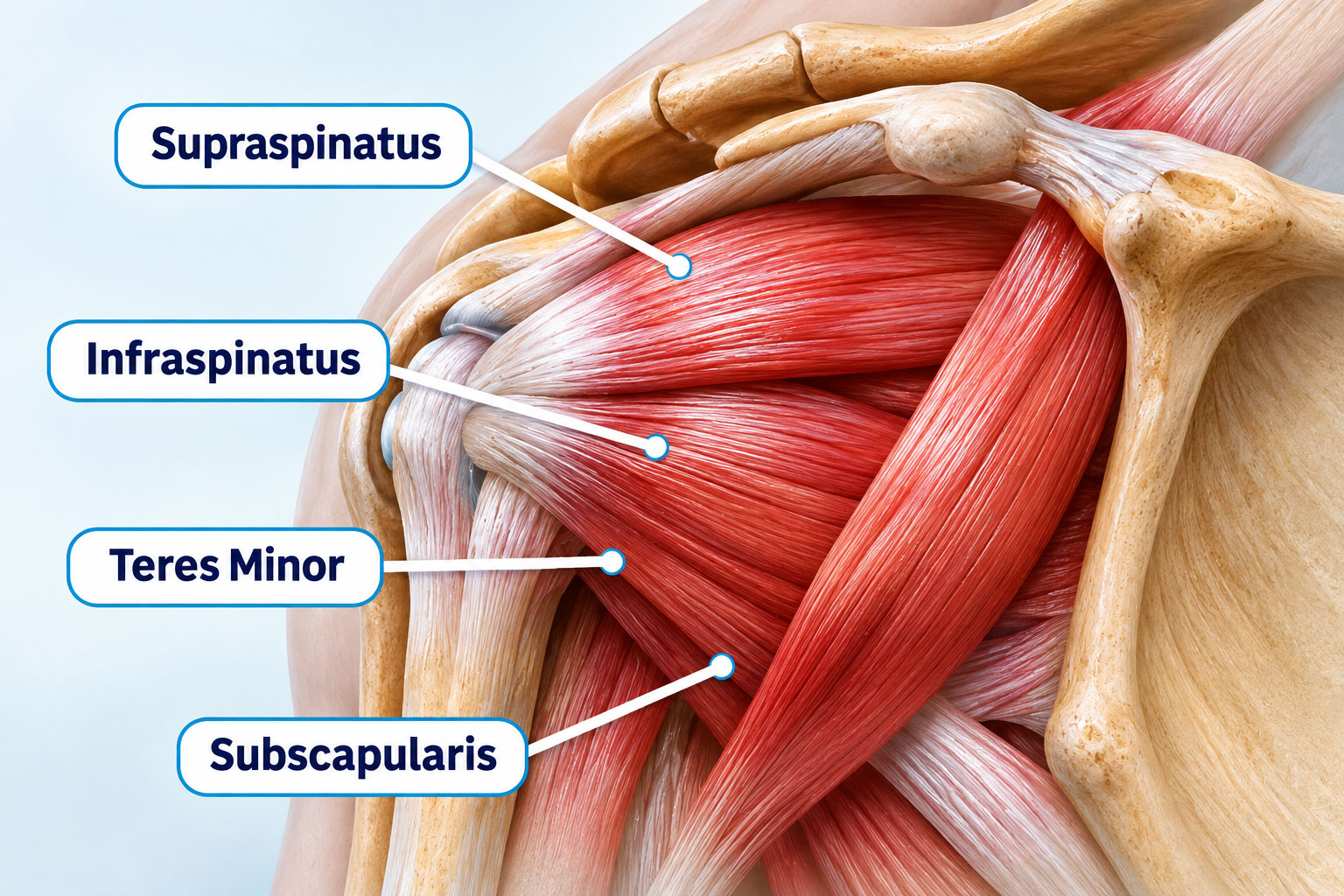
You may have been told you've got ‘shoulder impingement’. It's a term that's been around for years. Between the top of your upper arm bone and the bony roof of your shoulder (the acromion) is a small gap called the subacromial space. The rotator cuff tendons and a small, fluid-filled cushion called a bursa sit in this space, helping your arm glide smoothly as you lift it.
“Shoulder impingement” is the traditional name for the idea that these tissues get pinched or squeezed under the bony roof when you raise your arm.
Today, many clinicians use the broader term subacromial pain. Research suggests that the pain isn’t always caused by simple pinching, and that irritated or overloaded tendons and bursa, and how well your shoulder copes with the load placed on it, are often part of the picture.
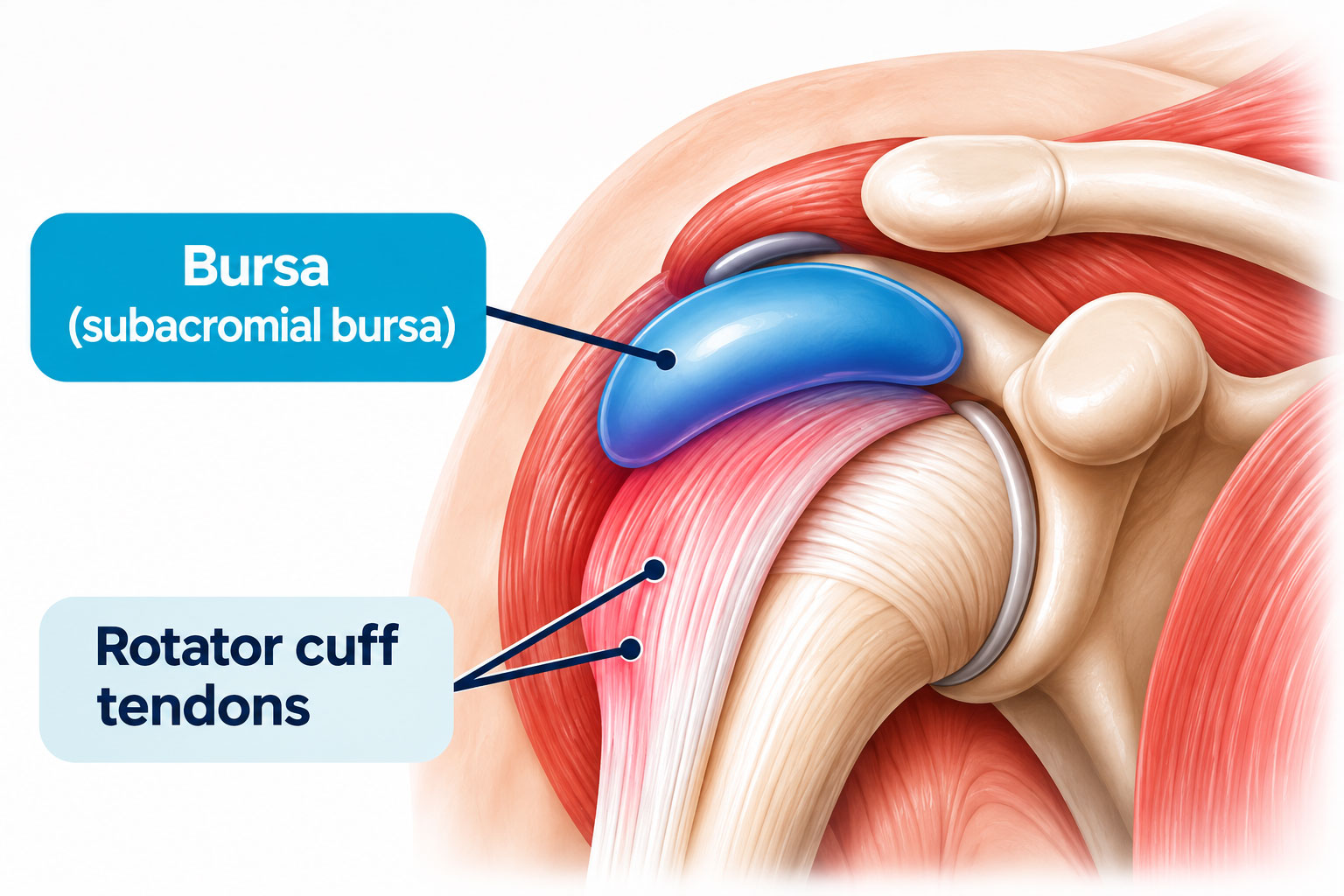
Shoulder impingement
The idea that the rotator cuff tendons and bursa are pinched under the acromion as you lift your arm.
Subacromial pain
Pain arising from the structures in the subacromial space, without assuming that pinching is the only cause.
What Does Shoulder Impingement Feel Like?
Shoulder impingement symptoms can vary from person to person. Common experiences include:
Pain lifting your arm
Sore at the front or side of the shoulder when raising your arm out to the side or overhead.
A “painful arc”
Pain through the middle of the movement that may ease once your arm is fully raised or back by your side.
Night-time ache
Discomfort when lying on the sore shoulder, or an ache that wakes you in the night.
Reaching behind your back
Pain doing up a bra, tucking in a shirt or reaching into the back seat of the car.
Everyday dressing
Putting on a jumper or jacket can catch or feel sharp.
Weakness or catching
Your arm may feel weaker or “catchy” when lifting, even if it isn’t severely painful.
Clicking or noise on its own isn’t always a problem. Pain, weakness or difficulty lifting your arm is worth having assessed.
Why Does Shoulder Impingement Happen?
There isn’t always one clear cause. Subacromial pain often develops when the load on the shoulder is more than the tendons are ready for. Common contributors include:
Repetitive overhead activity
Painting, hanging washing, gardening, swimming, tennis or overhead work.
A sudden increase in load
Doing a lot more than usual, such as a weekend of DIY, a new gym program or returning to sport.
Irritated or overloaded tendons
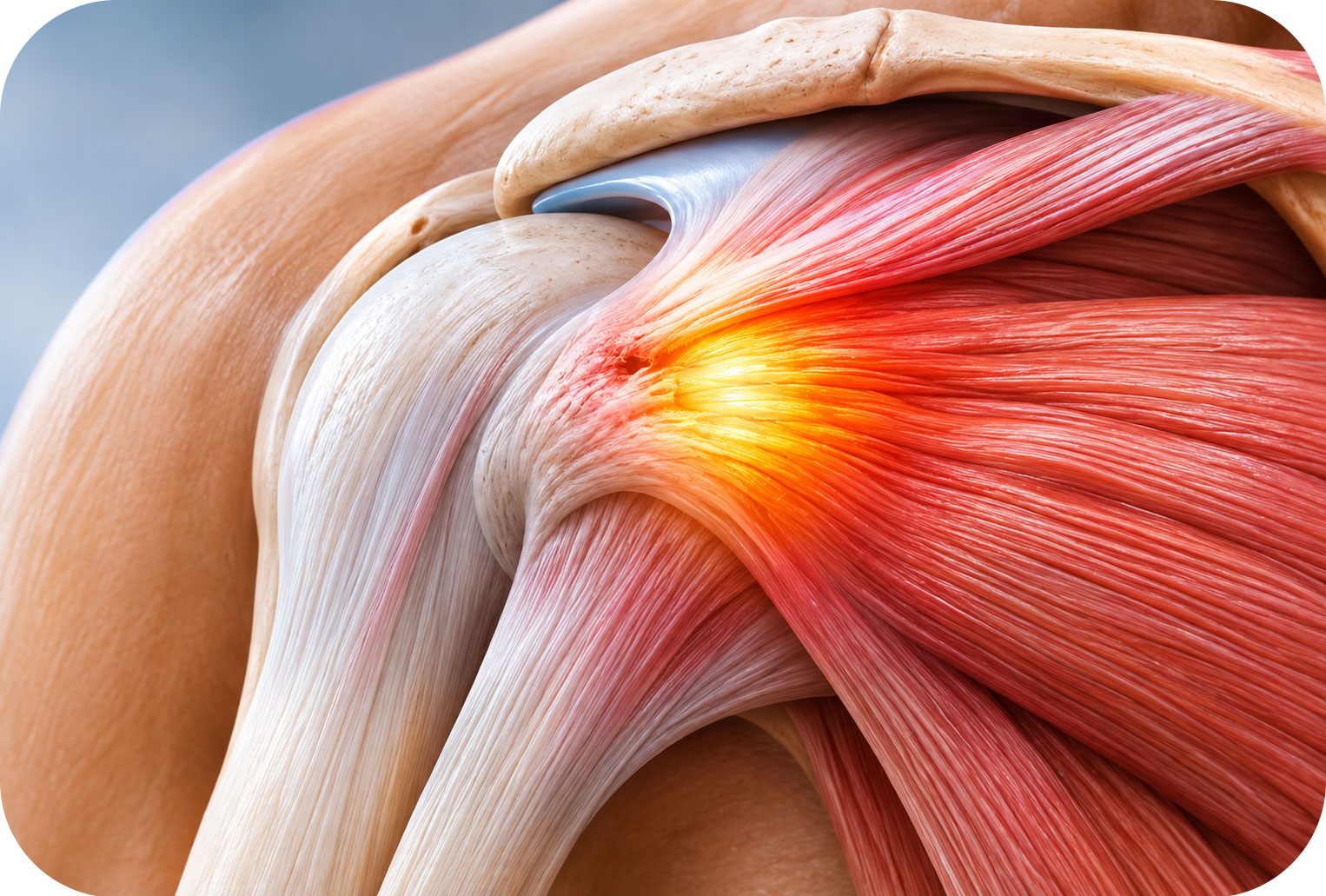
The rotator cuff tendons and bursa can become sensitive when they’re repeatedly stressed.
Strength and control
Reduced strength or control of the rotator cuff and shoulder blade muscles can change how the shoulder moves.
Prolonged positions
Long periods at a desk or in the car can add to shoulder stress for some people. There’s no single “perfect” posture.
Age-related changes
Tendons change over time, which is one reason shoulder pain becomes more common in middle age and beyond.
What Do We Do at Optimum?
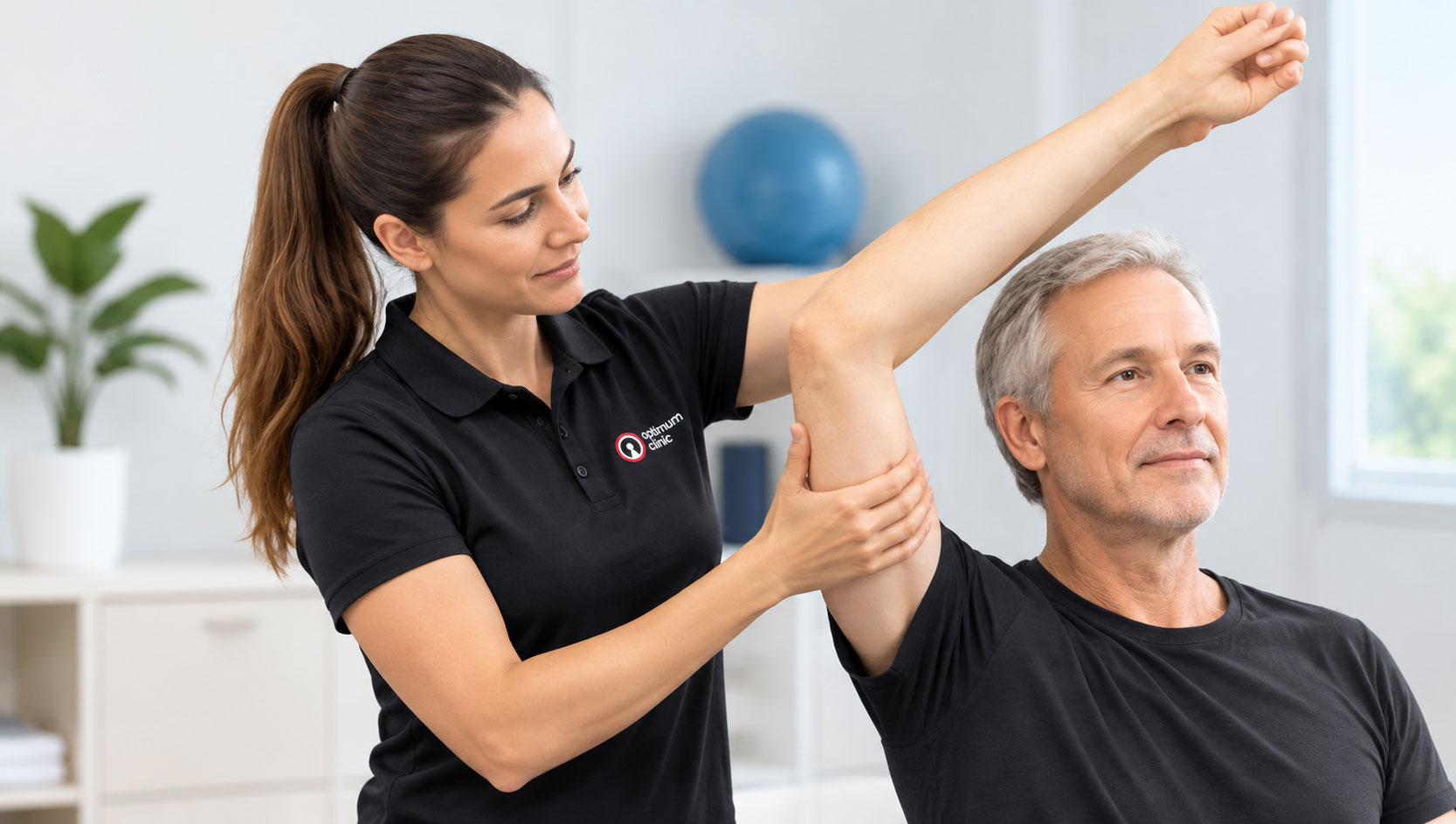
We'll check your movement, strength and the things that set it off. Sometimes moving the joint with our hands makes it more comfortable. Occasionally we'll try taping to see whether a different shoulder position helps. At home we might give you a pulley, a towel to help reach behind your back or a stick to guide the arm out to the side. Then we build up the rotator cuff and shoulder blade muscles. The aim is to make the shoulder more comfortable and able to do its job again.
If you're struggling to lift your arm, come in and we'll have a look.. Shoulder impingement treatment at Optimum may include:
- A thorough assessment – we check how your shoulder, neck and shoulder blade move, test strength and identify what’s contributing to your pain.
- Education and activity advice – temporarily modifying the movements that aggravate your shoulder rather than stopping everything.
- Progressive exercise – targeted strengthening and movement control for the rotator cuff and surrounding muscles.
- Hands-on treatment where appropriate, alongside exercise.
- A gradual return to work, sport and daily activities, with referral for imaging or medical review if needed.
Learn more about our shoulder physiotherapy in Wodonga or explore shoulder pain relief options.
When Should You See a Physiotherapist?
Consider booking an assessment if:
- Your shoulder pain has lasted more than a couple of weeks or keeps coming back.
- Lifting your arm, dressing or reaching is becoming difficult.
- Pain is disturbing your sleep, work or sport.
- You’re unsure what’s causing your pain and want clear advice.
Finding out what’s causing your pain early helps you get the right advice sooner.
Book an AppointmentSeek urgent medical attention
Get prompt medical help if shoulder pain comes with:
- Chest pain, shortness of breath or sweating (call 000)
- A fall or injury with deformity, or you can’t move your arm
- Sudden severe weakness or new numbness
- A hot, red, swollen joint or fever
Frequently Asked Questions
Is shoulder impingement the same as subacromial pain?
They’re closely related. Shoulder impingement is the traditional term, based on the idea that tissues are pinched under the bony roof of the shoulder. Subacromial pain is the broader, more current term for pain arising from structures in that area, without assuming that simple pinching is the only cause.
Why does it hurt when I lift my arm?
Lifting your arm increases the load on the rotator cuff tendons and the bursa in the subacromial space. If these structures are irritated or overloaded, movement through the middle of the range, especially out to the side or overhead, can feel sore.
Do I need a scan or X-ray?
Not always. Many shoulder problems can be assessed clinically. Imaging may be considered if the diagnosis is unclear, after a significant injury, or if symptoms aren’t improving as expected.
Should I stop using my shoulder?
Complete rest is usually not helpful. It often works better to temporarily reduce the movements that aggravate your shoulder while staying active within your comfort, then build up gradually.
How long does shoulder impingement take to improve?
It varies. Some people notice improvement within weeks, while longer-standing or more irritable shoulders can take several months of progressive rehabilitation.
Do I need an injection or surgery?
Most people with subacromial pain are first advised to try a period of guided exercise and activity management. Injections or surgery are sometimes discussed with a GP or specialist if symptoms don’t improve. Your physiotherapist can help you understand your options.
Can physiotherapy help with shoulder impingement?
Yes, physiotherapy is commonly recommended as a first-line approach. We assess your shoulder, identify what’s contributing to your pain and guide exercise, activity changes and a gradual return to the things you enjoy.
Further Reading
- PubMed: Clinical guidelines for the diagnosis and treatment of subacromial pain
- PubMed: Rotator cuff-related shoulder pain and exercise-based management
- Better Health Channel (Victoria): shoulder problems and injuries
This article is general information and isn’t a substitute for an individual assessment. If you’re unsure about your symptoms, book an appointment or speak with your GP.