What Exactly Is Shoulder Bursitis?
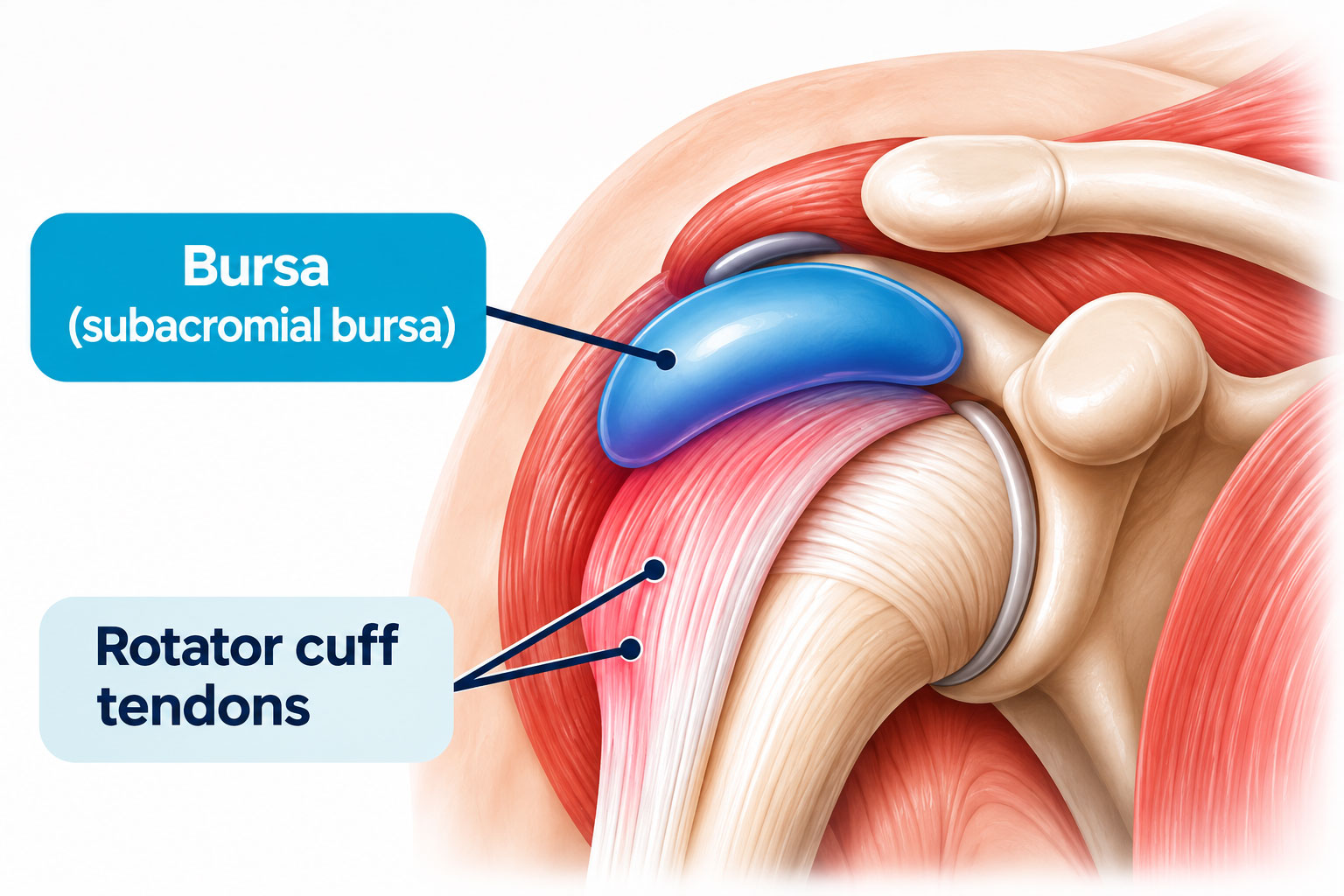
A bursa is a small, fluid-filled sac that acts like a washer or shock absorber. It helps tissues slide past each other without too much friction.
We have bursae in lots of places, including the shoulder, hip and knee. In the shoulder, the bursa we most often talk about sits above the rotator cuff tendons, underneath the bony roof of the shoulder. It isn’t actually inside the ball-and-socket joint.
Why Does It Get Sore?
Sometimes there’s an obvious reason, such as a fall. Other times it’s repeated lifting, overhead work or simply doing more than the shoulder is used to. The bursa can become irritated, sometimes alongside the rotator cuff tendons.

Common Signs Include:
- Pain when lifting your arm
- Discomfort putting on a shirt
- Pain when lying on that side at night
- A general ache, even at rest
Bursitis vs Other Common Shoulder Problems
Shoulder bursitis can feel similar to other conditions. Here’s a simple comparison:
| Condition | What it involves | Typical clues |
|---|---|---|
| Shoulder bursitis | Irritation and inflammation of a bursa (a fluid-filled sac) | Pain with lifting or overhead activity, lying on the shoulder can be uncomfortable |
| Rotator cuff problem | Irritation or injury to the shoulder tendons (rotator cuff) | Pain and weakness with certain movements, such as lifting or reaching |
| Frozen shoulder (adhesive capsulitis) | Thickening and tightening of the shoulder joint capsule | Gradual loss of movement and increasing stiffness over time |
What Can Help?
Treatment depends on what’s causing your pain. Options may include:
Physiotherapy and graded exercise
To reduce pain, improve movement and build shoulder strength.

Activity adjustments
Modifying or reducing activities that are aggravating your shoulder (e.g. overhead work or repeated lifting).

Medication (when appropriate)
An anti-inflammatory may be suitable for some people. Check with your pharmacist or GP first.

Further assessment (when indicated)
An ultrasound can be useful if the diagnosis isn’t clear or if symptoms aren’t improving.

How Physiotherapy Can Help
Physiotherapy can play a key role in settling your shoulder pain, restoring movement and helping your shoulder become more resilient. We’ll assess your movement and strength, identify what’s contributing to your pain and create a personalised plan to help you get back to the activities that matter to you.
Learn more about our Shoulder Pain Physiotherapy →
When to Come In
If your shoulder is keeping you awake or you’re struggling to lift your arm, come in and we’ll have a look. The important thing is finding out what’s causing the pain rather than assuming every sore shoulder is bursitis.