

Falls & Balance Physiotherapy
Improve Your Balance.
Move With Confidence.
Personalised falls prevention and balance physiotherapy in Wodonga to help you improve your stability, mobility and independence.
Personalised assessment
We look at your unique needs and goals.
Balance & strength training
Targeted exercises to improve your stability and mobility.
Support your independence
Practical strategies to help you stay safe and active.
About Falls Prevention
Falls and Balance Physiotherapy
Falls prevention and balance physiotherapy focuses on reducing the risk of falls, improving mobility and confidence, and helping people maintain independence in daily activities. It is particularly important for older adults, people with a history of falls, and people with neurological, musculoskeletal or vestibular conditions.
Falls are the leading cause of injury-related hospitalisation among older people.
At Optimum Physiotherapy Clinic, we take a holistic approach. By assessing your balance, strength, walking pattern, mobility and other factors that may increase your risk of falling, we gain a clearer understanding of your needs and develop a personalised treatment plan tailored to your goals.
Falls and balance problems shouldn’t limit your independence or confidence.
With the right physiotherapy approach, you can improve your stability, move more safely and enjoy greater confidence in your everyday life.
Falls Prevention
What Causes Falls?
Falls can happen for many reasons. Understanding the factors that contribute to your risk is the first step towards preventing future falls and maintaining your independence.
Poor balance and stability
Difficulty maintaining balance while standing, walking or turning.
Muscle weakness
Reduced leg strength, making it harder to stand up, climb stairs or recover from a stumble.
Slips, trips and stumbles
The most common recorded type of fall-related hospitalisation in Australia in 2024–25.
Walking and mobility problems
Changes in gait, slower reactions or difficulty lifting the feet.
Vision problems
Difficulty judging steps, obstacles or changes in floor levels.
Medications and dizziness
Some medicines, low blood pressure and other medical conditions can cause light-headedness or unsteadiness.
Environmental hazards
Slippery floors, loose rugs, poor lighting, clutter and uneven surfaces.
Chronic health conditions
Including stroke, Parkinson’s disease, arthritis and diabetes.
At Optimum Physiotherapy Clinic, our goal is to identify the factors contributing to your falls risk and develop a personalised treatment plan to help prevent future falls and injuries, improve your mobility, and restore your confidence and independence in everyday life.
Signs & Symptoms
What Can Impaired Balance or a High Falls Risk Feel Like?
Feeling unsteady on your feet
Feeling wobbly or unstable when standing or walking.
Fear of falling
Feeling anxious or less confident when walking outdoors, using stairs or moving around unfamiliar places.
Difficulty turning or changing direction
Feeling off-balance when turning quickly or changing positions.
Trouble getting up from a chair
Feeling weak or needing to use your hands for extra support.
Needing to hold onto furniture or walls
Relying on nearby objects to feel stable while walking around your home.
Feeling dizzy or light-headed
Experiencing sensations that make standing or walking feel unsafe.
Difficulty walking on uneven surfaces
Feeling less stable on grass, slopes, footpaths or stairs.
Taking shorter, slower steps
Walking more cautiously because you feel less secure.
Avoiding activities you once enjoyed
Reducing outings, exercise or social activities because of concerns about falling.
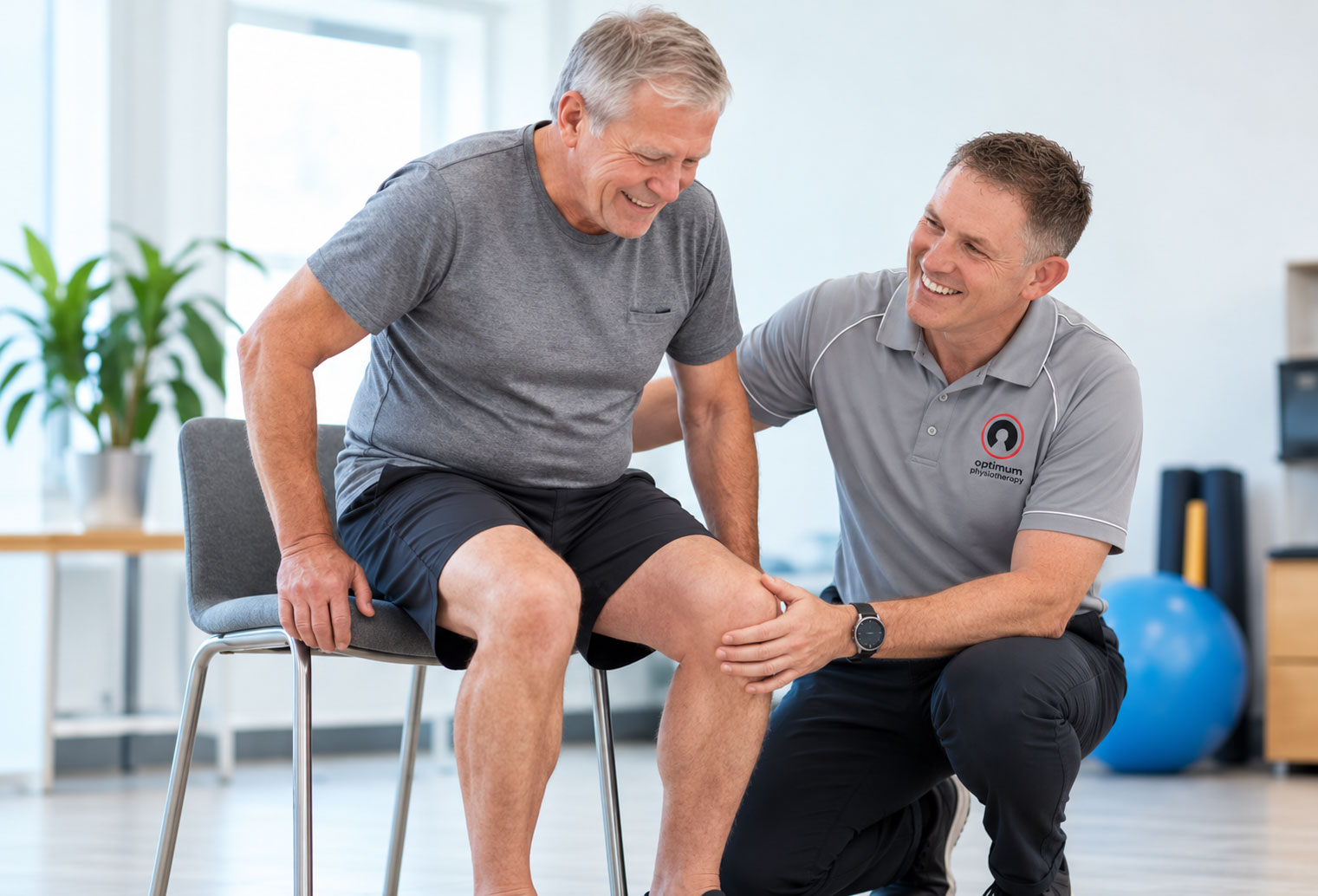
Early assessment makes a difference
When Should You See a Physiotherapist?
You do not need to have experienced a fall to benefit from a balance assessment.
If you have noticed changes in your balance, walking ability or confidence, a physiotherapist can assess your strength, mobility, gait and balance to identify potential risk factors and develop an appropriate falls prevention program.
Book a Balance Assessment →Our Approach
Your Treatment at Optimum Clinic
At Optimum Physiotherapy Clinic, we provide personalised falls prevention and balance physiotherapy to help you move safely, improve your stability and maintain your independence.
Physiotherapy can help by:
- Improving balance and stability: Targeted exercises help you maintain your balance while standing, walking and changing direction.
- Building muscle strength: Strengthening your legs and core can make everyday activities, such as standing up, climbing stairs and walking, easier and safer.
- Improving walking and mobility: Gait training helps address walking difficulties, turning problems and challenges navigating uneven surfaces.
- Reducing your risk of falls: A comprehensive assessment can identify contributing factors and guide an individualised falls prevention program.
- Increasing confidence: Guided exercises can help reduce fear of falling and encourage you to stay active.
- Improving everyday function: Functional training helps you manage daily activities with greater ease and independence.
- Providing practical advice: Your physiotherapist can recommend appropriate walking aids, home safety strategies and exercises suited to your abilities.
Take the First Step Towards Better Balance
You don’t need to wait until you experience a fall to seek help. Early assessment and appropriate physiotherapy can help address balance difficulties, improve mobility and reduce your risk of future falls.
Book a Balance Assessment →FAQs
Frequently Asked Questions
What is falls prevention physiotherapy?
Falls prevention physiotherapy focuses on improving balance, muscle strength, coordination and mobility to help reduce the risk of falls. A physiotherapist assesses your individual needs and develops a personalised treatment plan to help you move safely and maintain your independence.
What causes poor balance in older adults?
Poor balance can be caused by muscle weakness, reduced mobility, changes in vision, inner ear disorders, certain medications, neurological conditions and age-related changes. Environmental hazards, such as slippery floors and uneven surfaces, can also increase the risk of falling.
How can physiotherapy help prevent falls?
Physiotherapy can help reduce falls risk through targeted balance exercises, strength training, walking practice and functional mobility training. Your physiotherapist can also identify contributing risk factors and recommend strategies to help you move more safely at home and in the community.
What are the signs of impaired balance?
Signs of impaired balance may include feeling unsteady while walking, difficulty turning, struggling with stairs, needing to hold onto furniture for support, or feeling anxious about falling. If you notice these symptoms, a balance assessment may help identify the underlying issues.
Who can benefit from falls prevention physiotherapy?
Falls prevention physiotherapy may benefit older adults, people who have experienced previous falls, individuals with reduced strength or mobility, and people living with conditions that affect balance, such as Parkinson’s disease, stroke or vestibular disorders. You can benefit from an assessment even if you have never fallen.
What exercises help improve balance?
Balance exercises may include weight shifting, supported standing, stepping practice, sit-to-stand exercises, walking drills and lower-limb strengthening. The most appropriate exercises depend on your balance, strength, medical history and falls risk. Exercises should be prescribed and progressed safely.
Can physiotherapy help if I am afraid of falling?
Yes. Physiotherapy can help address fear of falling through supervised movement practice, progressive balance exercises and activities designed to build strength and confidence. Your physiotherapist can help you gradually return to activities that feel challenging while prioritising safety.
Do I need to have fallen before seeing a physiotherapist?
No. You can seek physiotherapy if you notice changes in your balance, walking ability, strength or confidence. Early assessment may help identify risk factors and allow you to take steps towards preventing future falls.
What happens during a falls risk assessment?
Your physiotherapist may review your falls history, medical conditions and medications, and assess your balance, lower-limb strength, walking pattern, mobility and ability to perform everyday tasks. Depending on your needs, they may also recommend a walking aid, home safety modifications or referral to another healthcare professional.
How long does it take to improve balance?
The time required to improve balance varies depending on your starting ability, health conditions, exercise consistency and individual goals. Some people notice improvements within several weeks, while others need a longer rehabilitation program. Regular, appropriately progressed exercise is important for maintaining improvements.
Can I receive falls prevention physiotherapy at home?
Home-based physiotherapy may be available depending on your location and the services offered. A home visit can allow a physiotherapist to assess your mobility in your usual environment and identify potential hazards that may contribute to falls.
How can I reduce my risk of falling at home?
You can reduce potential hazards by keeping walkways clear, improving lighting, securing loose rugs, wearing suitable footwear and installing appropriate handrails or grab rails where needed. Regular strength and balance exercise, medication review and vision checks may also help reduce falls risk.
How do I know if I am at a high risk of falling?
A history of falls, difficulty walking, poor balance, muscle weakness, dizziness and needing support to move around can indicate an increased risk. A physiotherapist or other healthcare professional can assess your individual risk and recommend appropriate interventions.
How do I book a falls and balance physiotherapy assessment?
Contact Optimum Physiotherapy Clinic to discuss your balance concerns, mobility goals and falls prevention needs. Our physiotherapy team can help determine an appropriate assessment and personalised treatment approach to support safer movement and greater independence. Book online or contact our team.